

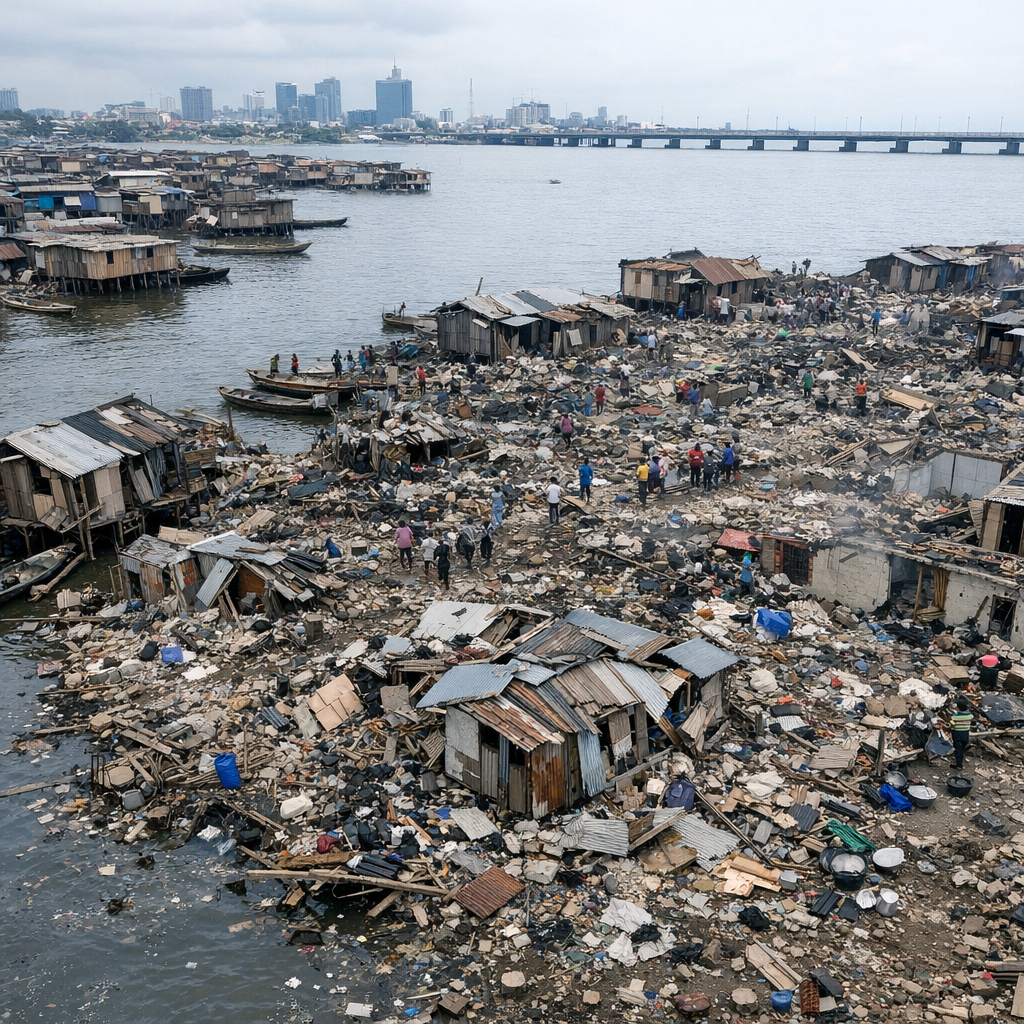
In recent months, several waterfront communities in Lagos have experienced significant demolitions, leading to the displacement of thousands of residents. These actions have sparked debates over urban development strategies and the rights of those living in informal settlements.
Demolitions in Makoko
Makoko, often referred to as the ‘Venice of Africa,’ has been a focal point of these demolitions. Established in the 19th century, Makoko is home to a large population living in structures built on stilts over the lagoon. In early 2026, reports indicated that over 10,000 residents were displaced due to demolitions that destroyed more than 3,000 homes. Residents alleged that the demolitions occurred without adequate warning or compensation, leaving many without shelter or means of livelihood.
Government’s Position
The Lagos State Government has justified these actions by citing safety concerns and the need for urban renewal. Officials have pointed to the proximity of these settlements to critical infrastructure and the potential risks posed by unregulated structures. However, critics argue that these measures disproportionately affect vulnerable populations and lack sufficient resettlement plans.
Community Response
In response to the demolitions, residents and civil society organizations have organized protests, calling for a halt to the evictions and demanding compensation for those affected. They emphasize the need for inclusive development plans that consider the rights and welfare of all Lagosians, particularly those in informal settlements.
Looking Ahead
As Lagos continues its rapid urbanization, balancing development goals with the rights of existing communities remains a pressing challenge. Ensuring that urban renewal projects are conducted transparently and equitably will be crucial in fostering a city that serves all its residents.