

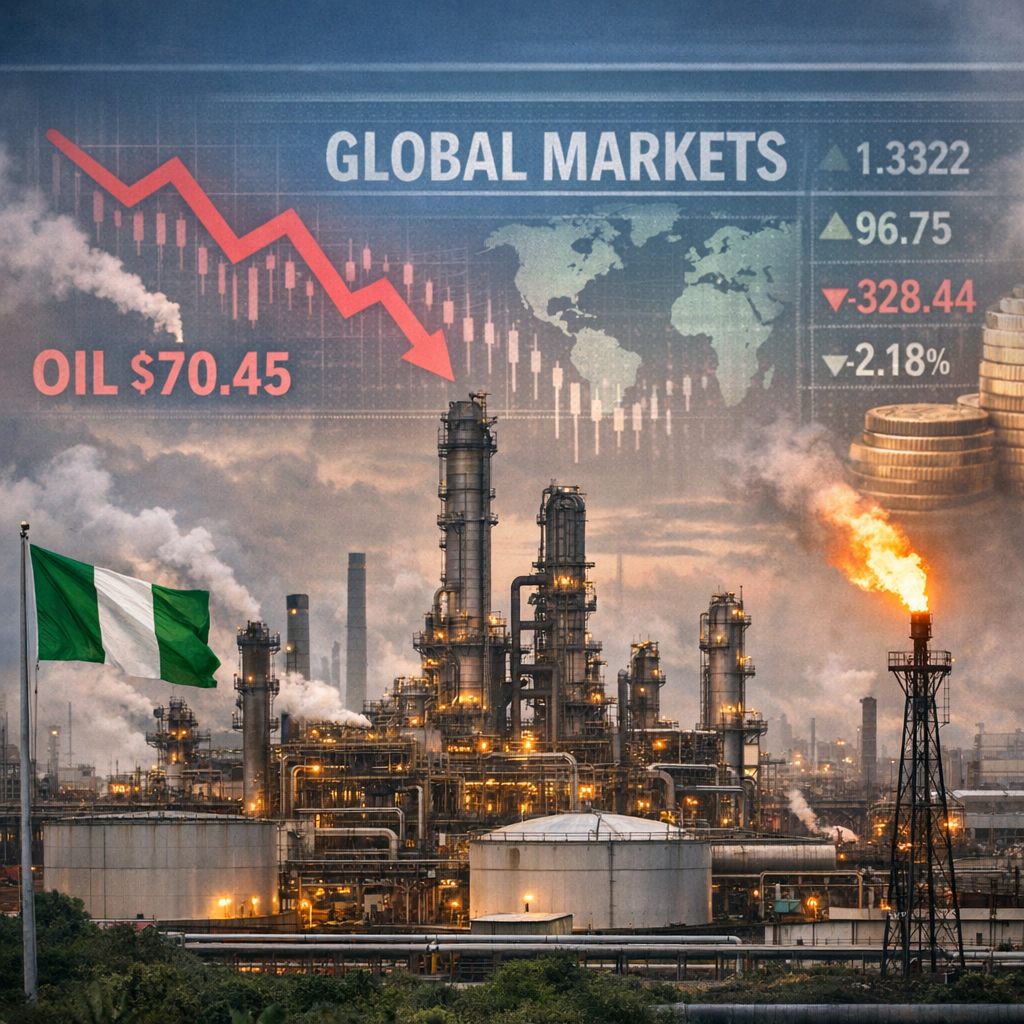
As Nigeria continues to navigate its economic landscape, understanding global economic trends is crucial for anticipating their potential impacts on our nation. Several key global dynamics are poised to influence Nigeria’s economic performance in the coming years.
Global Economic Growth and Trade
Global economic growth is projected to ease to about 3.1% in 2026, with global merchandise trade growth expected to slow sharply to around 0.5%. This slowdown in global trade could constrain Nigeria’s non-oil export expansion, reinforcing the country’s continued reliance on oil earnings and capital inflows as key drivers of growth. While service activity remains resilient globally, weak manufacturing output and inventory adjustments are limiting goods demand, reducing opportunities for export-led growth among frontier markets such as Nigeria. Source
Oil Market Dynamics
The ongoing conflict between the US-Israel and Iran has introduced shocks to the global energy market, pushing oil prices to $102.83 per barrel (Brent Crude) as of March 17, 2026, above Nigeria’s $64.85 per barrel benchmark price. This has created the prospect of short-term excess revenue above fiscal targets for Nigeria through higher oil receipts. However, Nigeria may struggle to fully capture the upside from crude prices above $100 per barrel. January production remains below the 1.84 million barrels per day budget assumption, while part of crude export proceeds is already linked to crude-backed and refinery-related obligations. As a result, higher prices do not fully translate into fiscal gains. Real upside depends on increasing production to generate more unencumbered barrels. Source
Monetary Policy and Inflation
Strengthening monetary policy effectiveness remains essential amid external shocks and price risks. The Central Bank of Nigeria (CBN) reduced the Monetary Policy Rate to 26.5%, signaling confidence that inflationary pressures are moderating. Despite this, Nigeria’s heavy reliance on the oil sector exposes the economy to potential downside risks as the global environment is marked by declining oil prices and reduced demand, driven by slower economic activity in European economies and China. Source
Fiscal Sustainability and Reforms
Addressing fiscal sustainability and executing reforms are crucial, with elevated debt obligations and deeper revenue mobilization shaping policy choices. Recent macroeconomic reforms offer a foundation for a new social compact. Stabilizing inflation, increased revenues and reserves, and enhancing exchange rate flexibility have improved macroeconomic stability and policy credibility. If sustained, the reforms can pave the way for deeper structural changes—such as improved public service delivery, better infrastructure, and a more conducive environment for private sector-led growth. Source
Conclusion
In conclusion, while global economic trends present both opportunities and challenges, Nigeria’s proactive engagement with these dynamics, coupled with sustained domestic reforms, can position the nation for resilient and inclusive growth.