

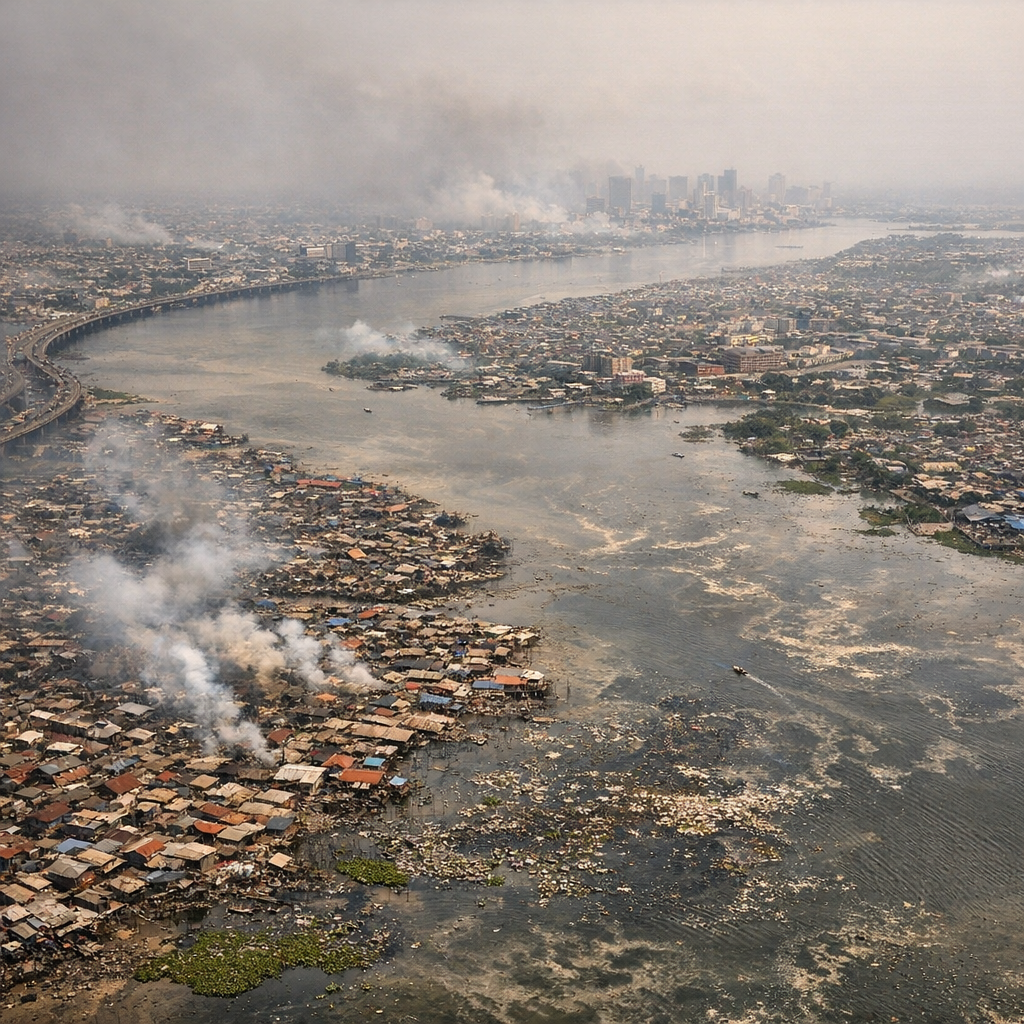
Lagos, Nigeria’s bustling commercial hub, is grappling with a range of environmental challenges that threaten the health and well-being of its residents. Key issues include waste management, air and water pollution, and coastal erosion.
Waste Management
With a population exceeding 20 million, Lagos generates over 14,000 metric tonnes of solid waste daily. However, only about 40% of this waste is collected, leading to open dumpsites that pose serious public health risks. The Lagos State Waste Management Authority (LAWMA) has been working to improve waste collection and disposal methods, but challenges remain in achieving comprehensive coverage and public compliance.
Air Pollution
The city’s air quality is a growing concern due to emissions from vehicles, industrial activities, and the widespread use of diesel generators. Studies have shown that air pollution levels in Lagos often exceed World Health Organization (WHO) recommended limits, contributing to respiratory issues among residents. Efforts to address this include promoting cleaner energy sources and enforcing stricter emissions regulations.
Water Pollution
Lagos’s water bodies, including rivers and lagoons, face contamination from industrial effluents and untreated sewage. This pollution leads to the spread of waterborne diseases such as cholera and dysentery. The lack of adequate sanitation facilities exacerbates the problem, highlighting the need for improved wastewater treatment and sanitation infrastructure.
Coastal Erosion
Coastal erosion is another pressing issue, with activities like sand dredging altering local ecosystems and threatening traditional fishing livelihoods. The environmental toll includes disrupted fish habitats and increased flooding risks. Addressing this requires balancing urban development with environmental conservation efforts.
Moving Forward
To tackle these challenges, a multi-faceted approach is necessary. Strengthening waste management systems, enforcing environmental regulations, investing in sustainable infrastructure, and raising public awareness are crucial steps. Collaborative efforts between government agencies, private sectors, and communities can pave the way for a healthier and more sustainable Lagos.