

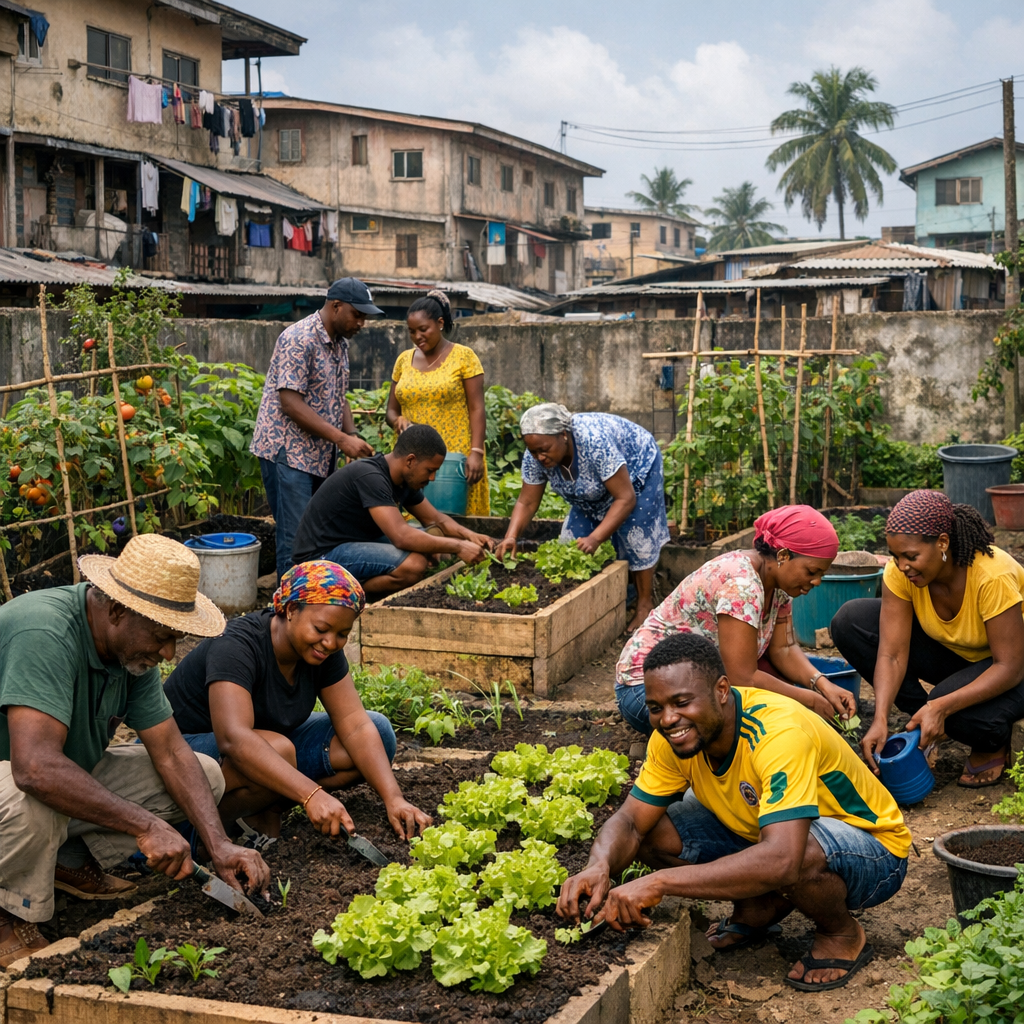
My name is Obinna Adebayo. I have lived most of my life in Surulere, Lagos, and lately I’ve seen change in places I never expected. Between the concrete slabs and busy roads, small patches of green are peeking through. Community gardens and allotment spaces are appearing across Lagos—transforming vacant lots into small productive havens. I want to talk about why these gardens matter, the stories behind them, and how they could shape a healthier Lagos.
What are community gardens doing in Lagos?
Community gardens in Lagos—also known as allotment gardens—are areas of land that residents convert into shared green spaces: growing vegetables, planting fruit trees, even gathering for workshops on composting or organic waste recycling. For example, the Lagos Urban Development Initiative has been working with LASPARK to develop a framework for allocating public land for gardens and horticultural farms. This includes setting rules for plot sizes, lease periods and shared responsibilities. It’s a way to formally give residents a chance to grow food, restore green cover, and develop stronger community ties.
Real stories: from Oworo to Apapa
In Oworo, youth groups have turned neglected land into green plots where people grow herbs, vegetables and small crops using recycled materials. The Oworo Youths Forum, for instance, helps households build vertical gardens from bottles and manages shared plots so neighbours can each grow 5–20 % of their food locally. This helps reduce food costs, improve diets, and heal a bit of the city’s heat stress and pollution.
On the other side of town in Apapa, a newly inaugurated Community Waste Management Group is springing from local leadership under the CLAIM Project, aiming to combine greener neighbourhoods with better environmental practices. Though waste management is their main task, members are exploring planting trees and turning compostable waste into fertiliser for small gardens in alleyways and public corners. These stories show Lagosians are taking action—turning complaints into community effort.
Challenges residents face
Growing food or trees in urban Lagos is no small task. Land in high demand can be expensive or unavailable. Some public land is tied up in bureaucratic processes or awaits development. Water supply for irrigation remains irregular in many areas. And there’s the issue of waste: composting needs training and infrastructure to turn organic refuse into fertile soil instead of letting it rot on sidewalks.
Why this matters for the long term
Community gardens offer more than just meals or green beauty; they build resilience. They provide public health benefits—from cleaner air and cooler microclimates to fewer pests where garbage isn’t lying around. They increase food security in times of crisis. They also help neighbours connect with each other in a city where many feel disconnected despite being crowded together. And they are models of sustainability—recycling, caring for land, harvesting what is grown locally.
How everyday residents can get involved
- Find out if your local ward or LASPARK runs an allotment or garden programme. Ask about available plots and how to share work.
- Join or start a waste-separation drive—kitchen scraps become compost, paper and plastic get recycled.
- Volunteer with youth groups like Oworo Youths Forum or civil society groups in Apapa or Surulere—it often starts with one or two people planting seeds.
- Advocate for land-use policy that preserves public green space and ensures access is equitable across Lagos, not just in high-income areas.
Lagos is often talked about in terms of traffic, crowding and rising costs. But the small gardens growing in empty spaces tell a different story: one of potential, of people quietly reclaiming bits of land and turning them into places of life and hope. I believe that as more Lagosians plant—not just in their pots, but officially, collectively—we will see the health of our city improve, and our connection to each other grow stronger. This green thread is being woven. With more support, it can become the fabric of Lagos’ future.