

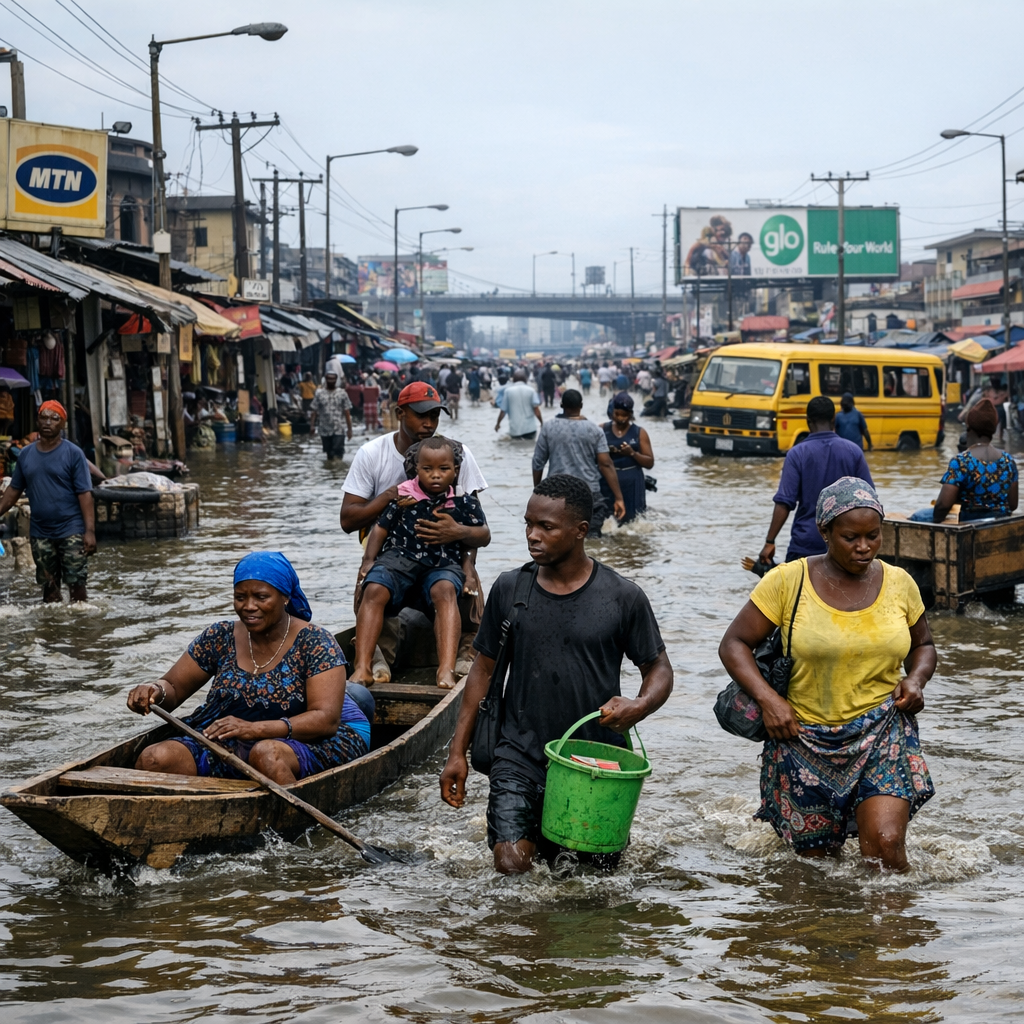
Lagos, Nigeria’s bustling commercial hub, is grappling with a series of environmental challenges that threaten its sustainability and the well-being of its residents. Key issues include flooding, inadequate waste management, and pollution, all exacerbated by rapid urbanization and climate change.
Flooding: A Persistent Threat
The city’s low-lying coastal geography makes it particularly susceptible to flooding. Rising sea levels and erratic rainfall patterns, driven by climate change, have intensified this problem. Unregulated groundwater extraction and the loss of natural surfaces due to urban development further reduce the city’s ability to absorb excess rainwater, leading to frequent and severe floods.
Waste Management: An Overwhelming Challenge
With a population exceeding 20 million, Lagos generates over 14,000 metric tonnes of solid waste daily. The city’s waste management infrastructure struggles to keep pace, resulting in open dumpsites and littered streets. This not only degrades the environment but also poses significant health risks to residents.
Pollution: Air and Water Quality Concerns
Air pollution in Lagos is a growing concern, attributed to the increasing number of vehicles, industrial emissions, and widespread use of diesel generators. The high concentration of pollutants contributes to respiratory issues among the population. Additionally, water bodies are contaminated by untreated sewage and industrial waste, leading to the spread of waterborne diseases.
Moving Towards Sustainable Solutions
Addressing these environmental challenges requires a multifaceted approach:
- Improved Waste Management: Implementing efficient waste collection and recycling programs can reduce pollution and promote a cleaner environment.
- Enhanced Drainage Systems: Upgrading and maintaining drainage infrastructure can mitigate flooding risks.
- Regulation of Urban Development: Enforcing policies that protect wetlands and natural surfaces can help absorb rainwater and reduce flood occurrences.
- Public Awareness Campaigns: Educating residents on proper waste disposal and environmental conservation can foster community involvement in sustainability efforts.
By adopting these strategies, Lagos can work towards a more sustainable future, ensuring the health and safety of its residents and preserving the city’s environment for generations to come.