

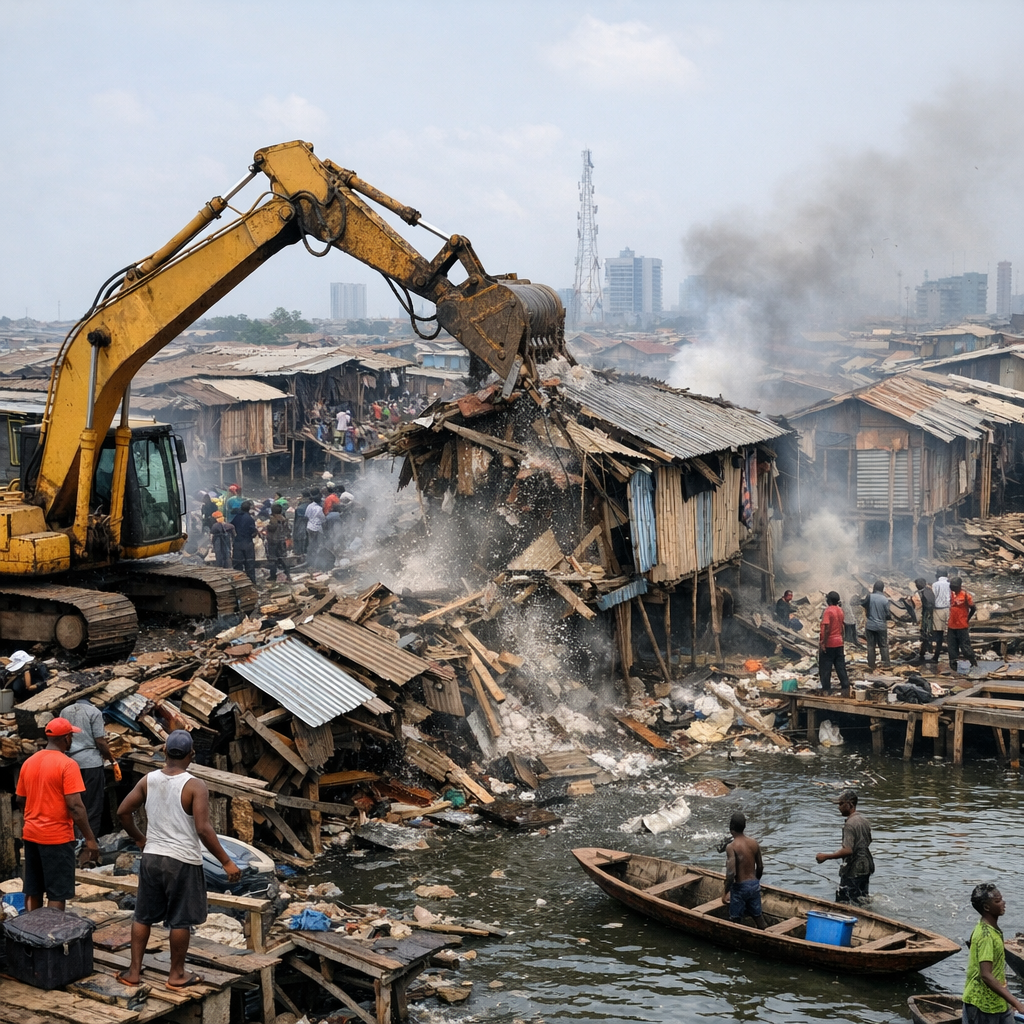
In recent months, several waterfront communities in Lagos have experienced a series of demolitions, leading to the displacement of numerous residents. These actions are part of the state’s broader urban development plans aimed at transforming the city’s landscape.
Makoko, one of Lagos’ oldest waterfront settlements, has been significantly affected. Officially, the demolitions are justified as safety measures around high-tension power lines. However, these actions have raised concerns about the human, environmental, and economic consequences of rapid urbanization in Nigeria’s commercial capital. Residents have reported that the demolitions have displaced families, destroyed livelihoods, and resulted in deaths, including infants and elderly residents.
Community leaders and civil society organizations have voiced their opposition to these demolitions. Protests have been staged at the Governor’s Office and House of Assembly in Alausa, demanding an immediate halt to the ongoing demolitions and compensation for displaced families. Activists have accused the Lagos State Government of violating earlier agreements and extending demolitions beyond approved safety setbacks from power lines.
The situation in Makoko is emblematic of the broader challenges faced by informal settlements in Lagos. The city, with a population exceeding 20 million, has been grappling with issues related to housing, infrastructure, and environmental sustainability. While urban development is essential for the city’s growth, it is crucial to balance these initiatives with the rights and well-being of its residents.
As Lagos continues its journey towards modernization, the experiences of communities like Makoko highlight the need for inclusive development strategies that consider the voices and needs of all citizens.