

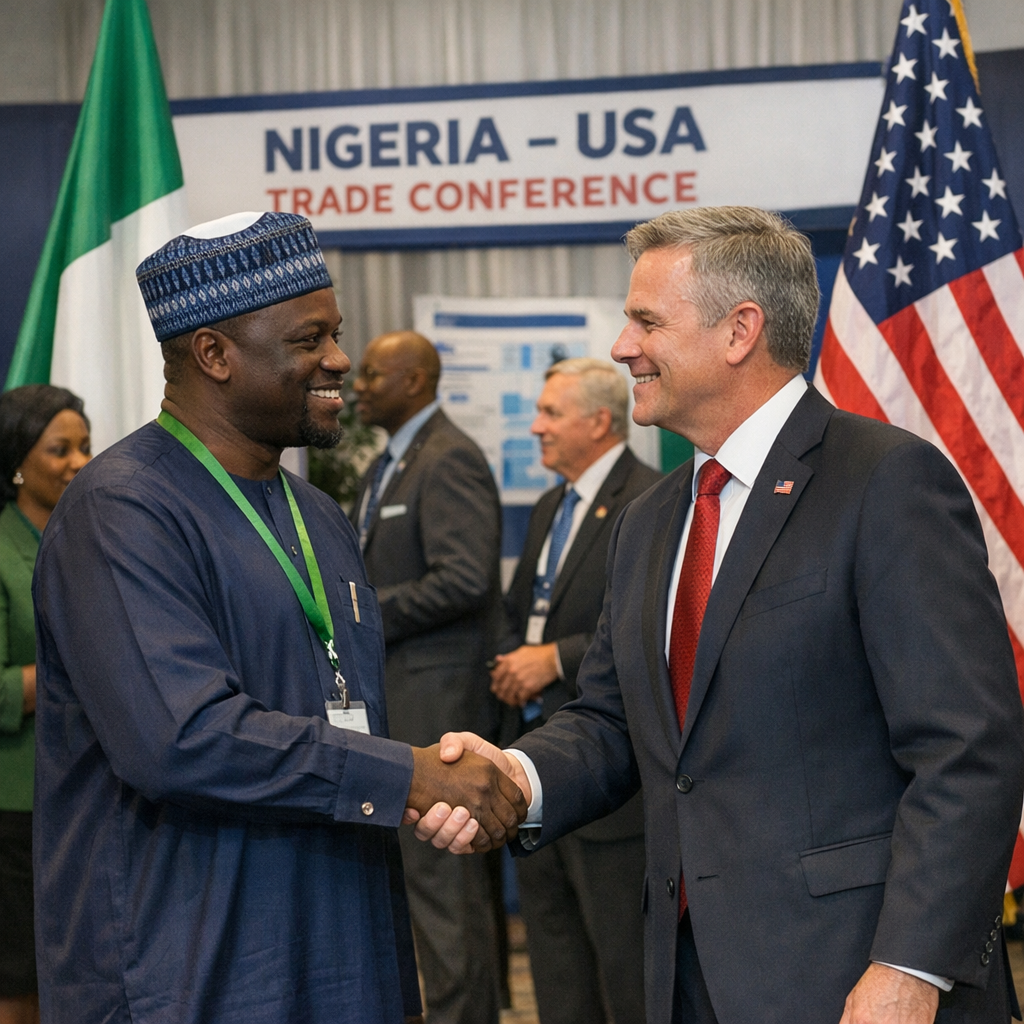
The trade relationship between Nigeria and the United States has seen significant growth and diversification over the years, reflecting a deepening partnership that benefits both nations.
Trade Agreements and Frameworks
In 2000, Nigeria and the United States signed a Trade and Investment Framework Agreement (TIFA), establishing a platform for dialogue on enhancing trade and investment opportunities. Additionally, Nigeria is eligible for preferential trade benefits under the African Growth and Opportunity Act (AGOA), which provides duty-free access to the U.S. market for certain goods. AGOA is currently in force until 2025, covering products such as agricultural goods, apparel, and motor vehicle components.
Bilateral Trade Statistics
Recent data indicates a robust trade relationship between the two countries. In 2025, U.S. goods exports to Nigeria were valued at approximately $6.8 billion, marking a 58.3% increase from the previous year. Conversely, U.S. goods imports from Nigeria totaled $5.0 billion, resulting in a U.S. goods trade surplus of $1.8 billion. This shift from a previous deficit underscores the evolving nature of the trade dynamics.
Key Export and Import Commodities
The trade portfolio between Nigeria and the United States is diverse. U.S. exports to Nigeria include vehicles, machinery, wheat, refined petroleum products, and plastics. On the other hand, Nigerian exports to the U.S. primarily consist of crude oil, cocoa, and agricultural products such as cashew nuts. This diversification reflects the mutual economic interests and the potential for further collaboration in various sectors.
Recent Developments
In January 2026, both nations reaffirmed their commitment to deepen trade and investment relations under the U.S.–Nigeria Commercial and Investment Partnership (CIP), a five-year framework aimed at strengthening bilateral commerce and driving private-sector-led growth. This partnership underscores the shared vision of fostering economic development and prosperity.
Conclusion
The evolving trade relationship between Nigeria and the United States highlights the importance of strategic partnerships and mutual economic interests. As both nations continue to collaborate, there is a promising outlook for sustained growth and diversification in their trade and investment engagements.