

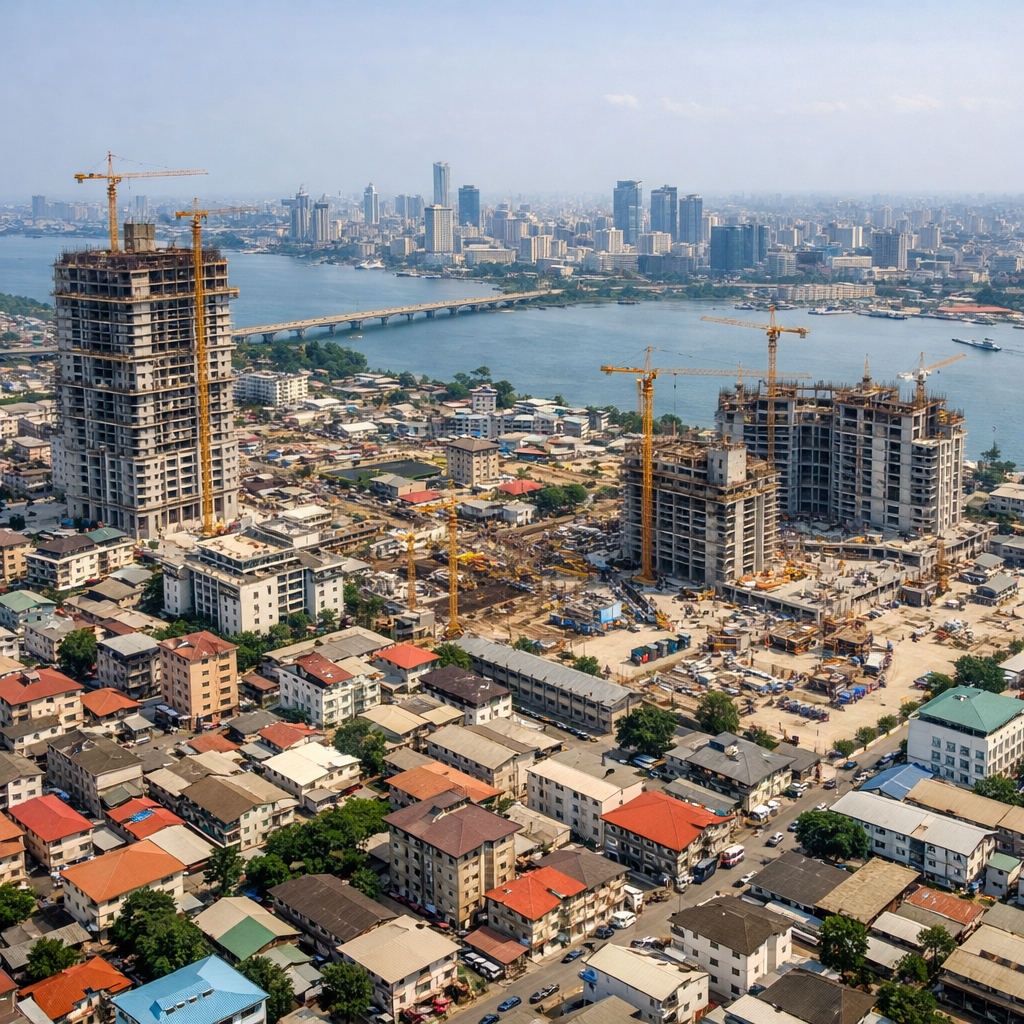
Lagos, Nigeria’s bustling commercial hub, continues to grapple with a significant housing deficit. Despite ongoing developments, the city’s residential supply remains insufficient to meet the growing demand.
Persistent Housing Shortage
Recent reports indicate that Lagos has a housing deficit exceeding 2.7 million units. While over 34,800 units are currently under development, this effort falls short of bridging the gap. The existing housing stock of approximately 1.8 million units is inadequate for the city’s expanding population.
Rising Rental Prices
The imbalance between supply and demand has led to escalating rental prices. Data shows that residential rents in Lagos have continued to rise, with notable increases recorded in various locations. This trend underscores the resilient demand in a market characterized by limited housing availability.
Focus on Luxury Developments
Developers are increasingly concentrating on luxury and high-end residential projects. This shift is largely driven by the need to protect profit margins amid economic challenges such as rising construction costs and currency depreciation. Consequently, the affordable and middle-income housing segments remain underserved.
Impact on Residents
The housing crisis has profound effects on Lagos residents. Many individuals are compelled to live farther from their workplaces, resulting in extended commutes and reduced quality of life. The disparity between wage growth and rental costs exacerbates the situation, making it difficult for many to afford suitable housing within the city.
Looking Ahead
Addressing Lagos’ housing challenges requires a multifaceted approach. Increased investment in affordable housing, supportive government policies, and innovative financing solutions are essential to create a more balanced and accessible housing market for all residents.